
NXT Development
You have the strategy. What you don’t have is a way to run it.
NXT Development is the delivery arm. We don’t just advise on paper — we build the thing, with your team, and hand it over for them to run. Including when the strategy came from someone else.
- Delivery tracks from systems and procedures to market entry and brand
- Working across Egypt, the Gulf and Libya
- Ownership transfers to your team — that is the point
01Advisory or Development
Which one you need, in one line.
Come to Advisory when
You do not yet know why the institution is underperforming. The symptom is clear; the cause is not.
Come to Development when
The decision is already made — by us or by another firm — and nothing has been built. You know what needs to exist; it does not exist yet.
Stay here
When both apply, one engagement carries through: Advisory names the cause, Development builds the answer, and the same senior people stay across the boundary.
02What we deliver
From plans to capability. From capability to performance.
NXT Development helps organisations build the capabilities required to execute effectively, strengthening people, processes, systems and performance so that improvement becomes part of how the organisation operates.

ERP and systems implementation
What it is
Getting the system you have bought, or are about to buy, to produce the numbers and controls the business actually needs.
What that looks like
Specifying what each module must produce, mapping the chart of accounts to how the business is really run, and testing that month-end closes without a spreadsheet kept on the side.

Feasibility studies
What it is
Answering whether a project, a line of business or an investment is worth doing — before the money is committed.
What that looks like
A costed model with every assumption written down and challenged, so the board can see exactly what has to be true for the return to hold.

Market entry and penetration testing
What it is
Working out whether a new market or segment will take what you sell, and what reaching it would cost.
What that looks like
Sizing the segment, mapping who already serves it, testing the proposition with real buyers, and coming back with a route in — or with the reasons not to go.

Brand and identity
What it is
The name, the look and the language an institution uses — made consistent, and made to say the right thing.
What that looks like
A brand system with logo, palette, typography and tone rules, plus the templates that keep every department producing the same institution.

Cash and working capital management
What it is
Freeing the cash already sitting inside the business — in receivables, payables and stock — before borrowing more.
What that looks like
Rebuilding collections and payment terms so cash arrives earlier, with a rolling forecast leadership can read weeks before the pressure lands.
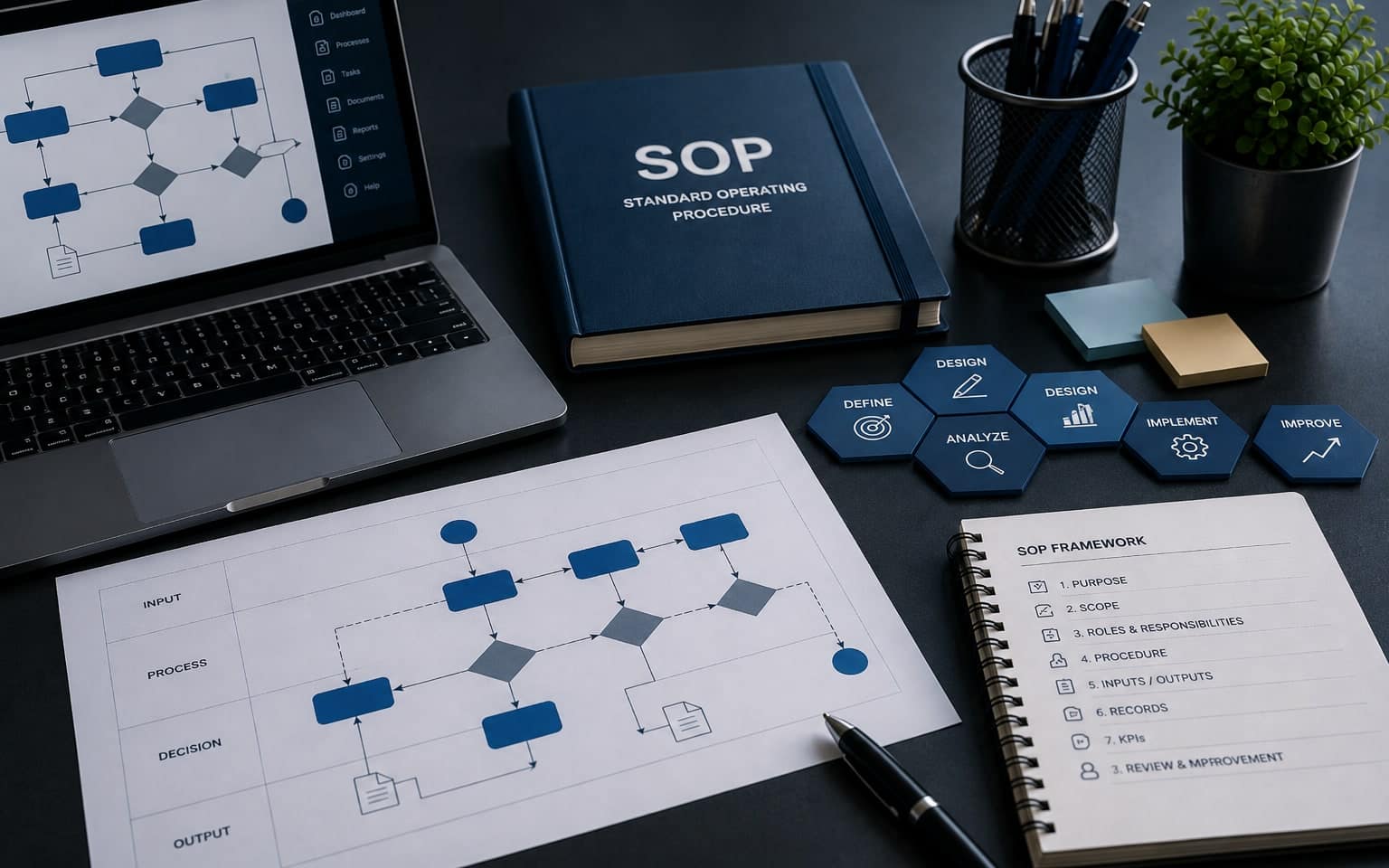
SOPs and process design
What it is
Writing down how the work actually gets done, so it survives the person currently doing it.
What that looks like
Procedures across the core functions with the controls, approvals and hand-off points that make them enforceable rather than aspirational.
The list is illustrative, not a menu. The work is scoped to what the diagnosis requires — which is why two engagements with the same title rarely contain the same tasks.
Know what needs building? Bring the decision and we will scope the build.
Book a 30-minute call03What changes on the ground
Before and after, in plain terms.
ERP and systems
Today
The system went live, and the numbers people actually trust still sit in a spreadsheet beside it.
After
One set of numbers, produced by the system, and a month-end that closes without a parallel file.
Feasibility
Today
The decision rests on a model nobody has interrogated, and its assumptions live in one person’s head.
After
Every assumption is written down, challenged and owned, so the board can see what has to be true.
Market entry
Today
The new market is a conviction rather than a plan, and nobody can say what reaching it would cost.
After
A sized segment, a named route in, and a cost to reach it — or a documented reason not to go.
Brand and identity
Today
Every department produces its own version of the institution, and none of them look related.
After
One system and one voice, with templates that make consistency the default rather than the effort.
Cash and working capital
Today
The business is profitable and the cash is always somewhere else.
After
Cash arrives earlier, and leadership sees pressure forming weeks before it lands.
SOPs and process
Today
How the work gets done depends on who is doing it, and leaves when they do.
After
The process survives the person: work is done the same way regardless of who is in the seat.
04How delivery runs
We build it with your team, then hand over the keys.
Implementation only works if the people who will live with the system help build it. That shapes how we run delivery.
- 01Who is in the roomA senior advisor leads, working alongside the function heads who will own the result. Your team is the build team, not an audience.
- 02How ownership transfersNamed internal owners run the new system under supervision before we step back — the transfer is a phase of the work, not an email at the end of it.
- 03What the handover containsProcedures, definitions, report templates and the log of decisions taken — everything needed to run the system and to explain it to someone who joins next year.
- 04After go-liveA support period follows go-live, while the new way of working meets reality — plus the option to certify your team on it through NXT Training.
The working pattern and the length of the support period are agreed at scoping, alongside the scope itself — they depend on what is being built and who is building it with us.

05How every build ends
Every build ends the same way: your team running it without us.
Book a 30-minute call06Engagements
Success stories.
 Government investment organisationWhy most strategies fail before execution beginsAn ambitious strategy, experienced leadership — and a delivery gap between them.Executives stopped asking “what has been completed?” and started asking “what is preventing success?”.
 Regional energy companyWhen better reports still lead to poor decisionsA capable finance team producing more information than ever — and less confidence with every report.Management meetings changed: from “why did we miss budget?” to “what operational decisions caused this result?”.
07Questions
Before you call.
Yes, and it is the common case: a strategy already exists — from us or from another firm — and needs executing. If you know what needs building, we scope the build directly.
Both are possible, and which one applies is scoped to the engagement. Some clients want the design and will build it themselves; others want it built with them and handed over.
You do. Procedures, frameworks, templates and reports are yours to use, change and extend after the engagement ends.
That is common, and it is not a problem. We can execute against work another firm produced, working from their analysis rather than charging you to repeat it.
Ownership transfers to named internal owners during delivery, not after it. Function heads sit in the working group, those owners run the system under supervision before we step back, and we can certify them on the result through NXT Training.
Your first step
A 30-minute scoping call.
One call with the senior advisor who would lead the build. You describe what needs to exist; we tell you what building it actually involves.
- 01You describe the decision already made — the system, function or process that needs to exist.
- 02We tell you which build it is, what it would deliver, and what your team would need to put into it.
- 03You leave knowing whether this is a build, a diagnostic first, or something you can run in-house.
No pitch deck, and no proposal unless you ask for one.